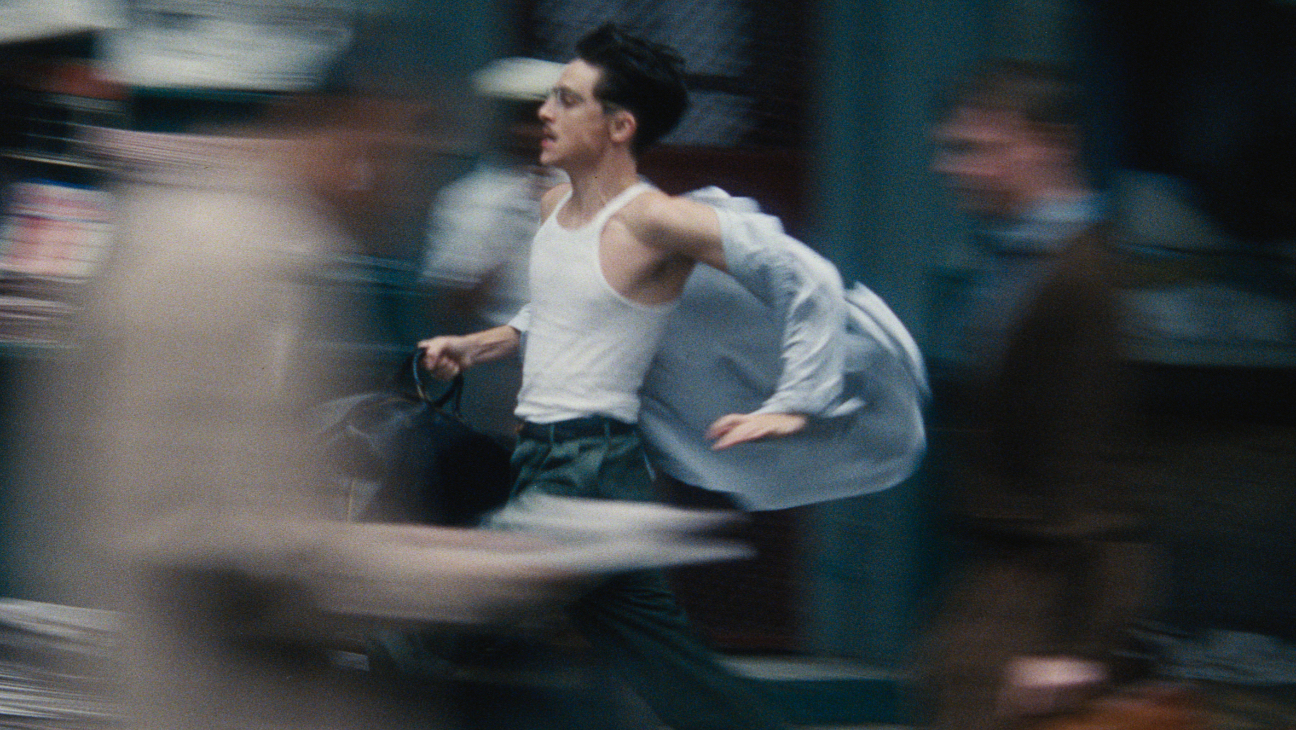

Marty Supreme is about Marty Mauser, a young man with ping-pong dreams that absolutely no one respects. Not his peers, not his family, not the gatekeepers, not the vaguely sinister creeps circling the sport like sharks. Marty wants to be the next big thing in sports, and the movie makes it clear early on that wanting something badly has never been enough in America, especially if the thing you want is weird.

Marty Supreme hums with the anxiety and tension that those familiar with Josh Safdie’s work will recognize, though it’s not as punishing or unrelenting as Uncut Gems (Unca Jamz, if you will. That clip will never not be funny). Instead of grinding you down, Marty Supreme keeps zigzagging, pulling the rug out just as you think you’ve settled into a groove. Several times throughout, you begin to fool yourself into thinking you know what kind of movie this is. But, you do not.
Timothée Chalamet is terrific. The whole cast is, really. There’s quite an interesting cast featuring Gwyneth Paltrow, Fran Drescher, Penn Gillette, Tyler the Creator, Abel Ferrara, and more. And yes, Kevin O’Leary is surprisingly good. Though they’ve essentially (and brilliantly) cast a famously unlikeable guy so there can be someone on screen that seems worse than Marty. Which is useful, because Marty himself is often unlikeable. That said, he’s usually sympathetic. The film doesn’t belabour it, but Marty grew up hustling in the sordid ping-pong dens of gritty 1950s New York (was that a thing?). Chalamet sells both sides of the character: the suffocating narcissism and the boyish charm and rizz that make Marty a natural salesperson of his own mythology.

As I alluded to, the movie keeps refusing to be just one thing. It presents itself as a sports movie, then interrupts that with a madcap, almost screwball adventure. It’s fast-talking, funny, and weird, not just in its central idea, but in its execution. There are little digressions and moments that come out of nowhere, like a story involving a concentration camp and a honeybee hive, that shouldn’t work and yet somehow does. That’s confidence. Or madness. Possibly both.
What is supreme here is the filmmaking. This movie is alive. It’s about sports, fame, the American Dream, and the darker edges of capitalism. If we’re all Marty, then we’re all dreamers, and whether we’re skilled or not, we’re just banging up against billionaires and their concerns. The game is always rigged. The movie both mocks and celebrates the brashness of youth and hustle, that belief that confidence alone might somehow bend reality.

Because of its singular tone and tension, it may not work for everyone. But I loved it. Like the American films of the 1970s, it’ll be original voices like this that will have the power to save the movies themselves. Not the heart-pounding confusion and anxiety that have become a Safdie hallmark, but the bigger idea: telling a truly unique story, transporting us to a time, place, or with characters we can’t always access on our own, yet reflect life as we recognize it. Marty Supreme runs close to two and a half hours, and while it doesn’t earn every single minute, like its title character, it hustles hard to earn most of them.
There’s a bit more below, but with a big spoiler warning!

SPOILER WARNING: One of the major things the movies doesn’t earn is the coda, when Marty gets back to America. He becomes a fundamentally different character without doing a second of visible reflection, confessing his love for someone who may have been a long-time friend and lover, but was mostly a pawn and a means to an end for him. I’m currently watching the most recent season of The Bear, and it’s taking an entire season just to watch Carm begin to recognize that other human beings exist. Sure, Chalamet makes it work when he cries at seeing his own son, but moving away from that kind of narcissism isn’t a switch you flip. Not in real life and not in the movies — you need scenes leading to that kind of change. The ending of the film itself is satisfying in terms of where his ping pong career ends up, so I didn’t feel cheated. But the coda made me mildly skeptical of the cheapness of where the chips fall in terms of his character and what he has learned. A very small gripe in an otherwise excellent film.